
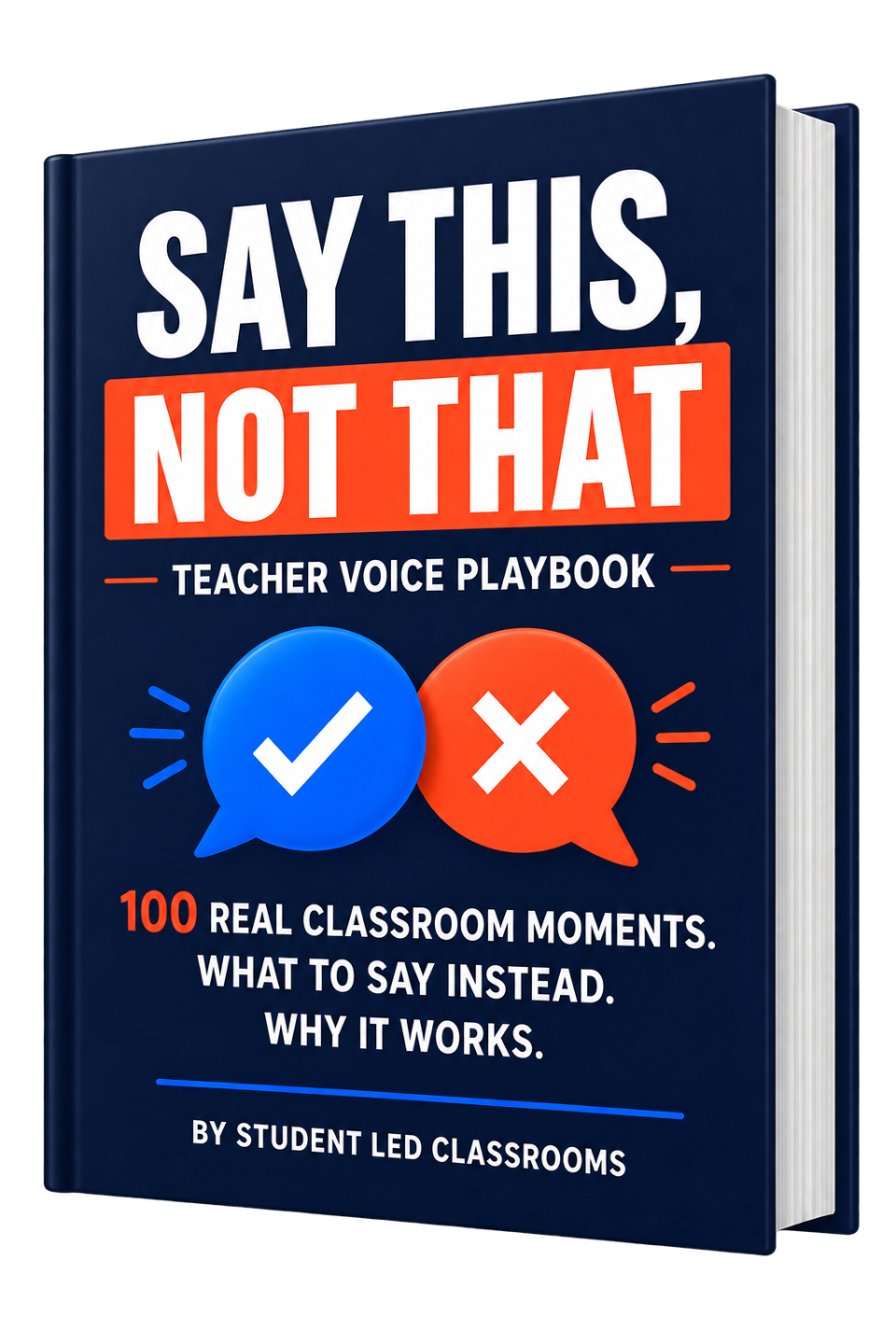
You don’t need another classroom management theory.
You need the words.
The Say This, Not That: Teacher Voice Playbook gives you 100 common classroom situations and shows you exactly what to stop saying — and what to say instead. So instead of reacting in the moment...you'll have language that is clear, calm, firm, and actually moves students toward the behavior you want.

YOU PROBABLY DON'T NEED A LOUDER VOICE.
YOU NEED A MORE INTENTIONAL ONE.
Your voice is one of the most powerful classroom management tools you have.
But most teachers were never actually taught how to use it.
So when students don't respond, we naturally start doing more.
✓ We repeat ourselves. ✓ We explain. ✓ We lecture. ✓ We ask questions that sound optional. ✓ We add warnings. ✓ We raise our voice.
And sometimes the more we say, the less students listen.
That's why I created this playbook. Not to give you more theory. To give you better words.

HERE'S WHAT THAT LOOKS LIKE:
And notice what you're NOT doing. You're not yelling. You're not begging. You're not threatening. You're not turning a direction into a debate. You're not giving a five-minute speech. You're saying less — with more clarity.
IMAGINE HAVING THE WORDS READY BEFORE YOU NEED THEM.
✓ Imagine a student argues with you...and instead of getting pulled into the argument, you already know what to say.
✓ Imagine your class starts talking during directions...and instead of repeating yourself five times, you have a response ready.
✓ Imagine a student refuses...and instead of choosing between getting angry or giving in, you know how to be calm AND firm.
That's what this playbook is designed to help you practice.
Not perfect words.
Intentional words.
THE GOAL ISN'T TO SOUND LIKE ME.
IT'S TO SOUND LIKE THE CALMEST, CLEAREST VERSION OF YOU.
Teacher Voice isn't about being intimidating. And it isn't about being permissive. It's learning how to communicate expectations with enough clarity that you don't have to rely on volume, frustration, or endless repetition.
Because sometimes the difference between a power struggle and student follow-through... is one sentence.
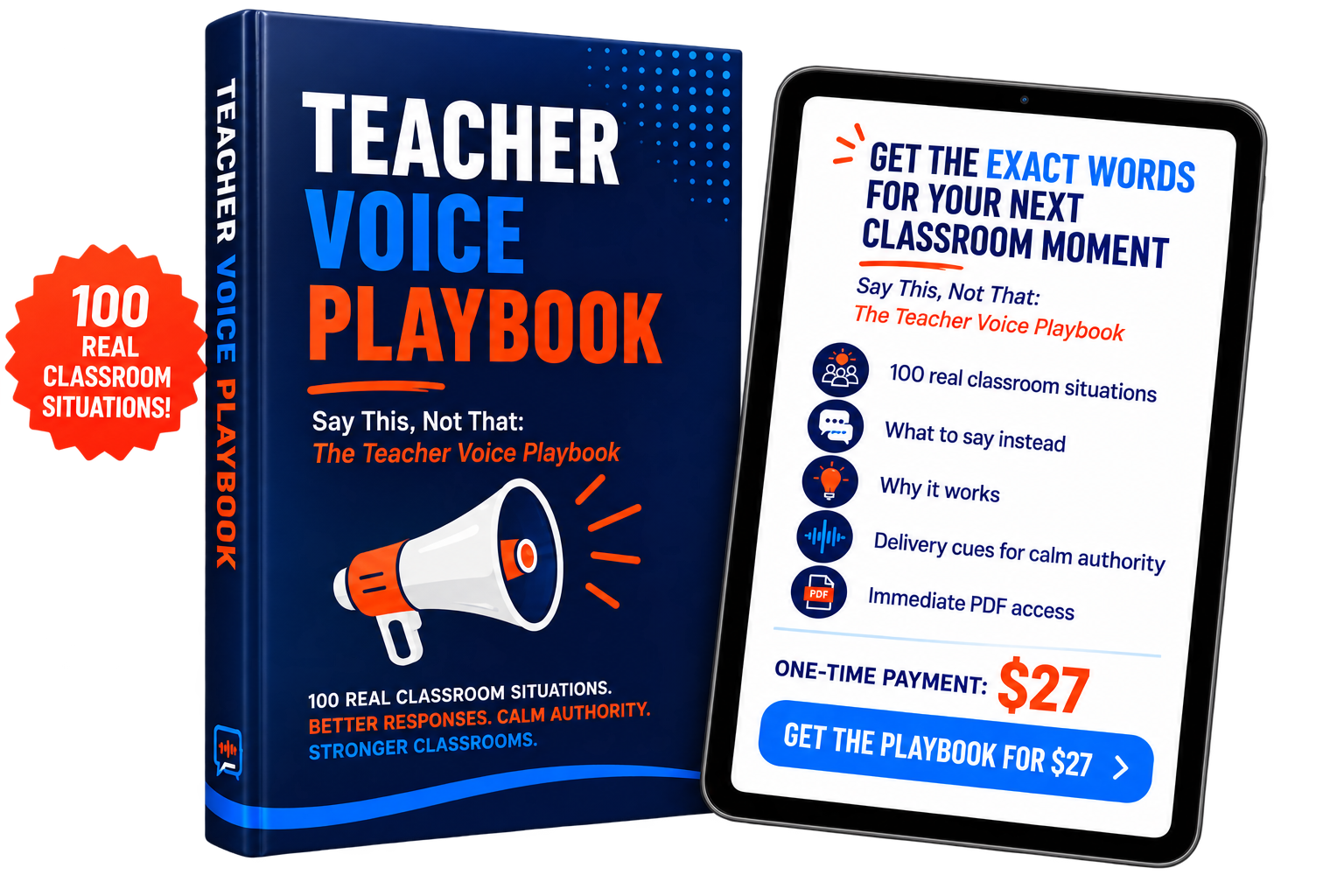
GET THE
SAY THIS, NOT THAT:
TEACHER VOICE PLAYBOOK
100 classroom situations.
100 language shifts.
Words you can use Monday morning.
For the next 48 hours: ONLY $27 🏷️

MICHAEL ADAMS
Michael Adams is an elementary school counselor, educator, and founder of Student Led Classrooms, where he helps teachers create calm, connected classrooms by changing what happens in the moments that matter most.
After more than a decade working alongside elementary students and teachers, Michael noticed something: educators are often taught what students need, but not always what to say when a student refuses, shuts down, lashes out, or hurts another student.
That gap became the foundation of his Teacher Voice framework and “Say This, Not That” approach—practical language educators can use to combine compassion with accountability.
Michael’s work has grown rapidly through social media, where his classroom strategies are now reaching educators around the world and sparking conversations about a simple idea: sometimes changing the classroom starts by changing the words adults use inside it.
Through speaking, training, and Student Led Classrooms, Michael helps educators communicate with greater confidence, build stronger relationships, and create environments where students feel supported, capable, and accountable.